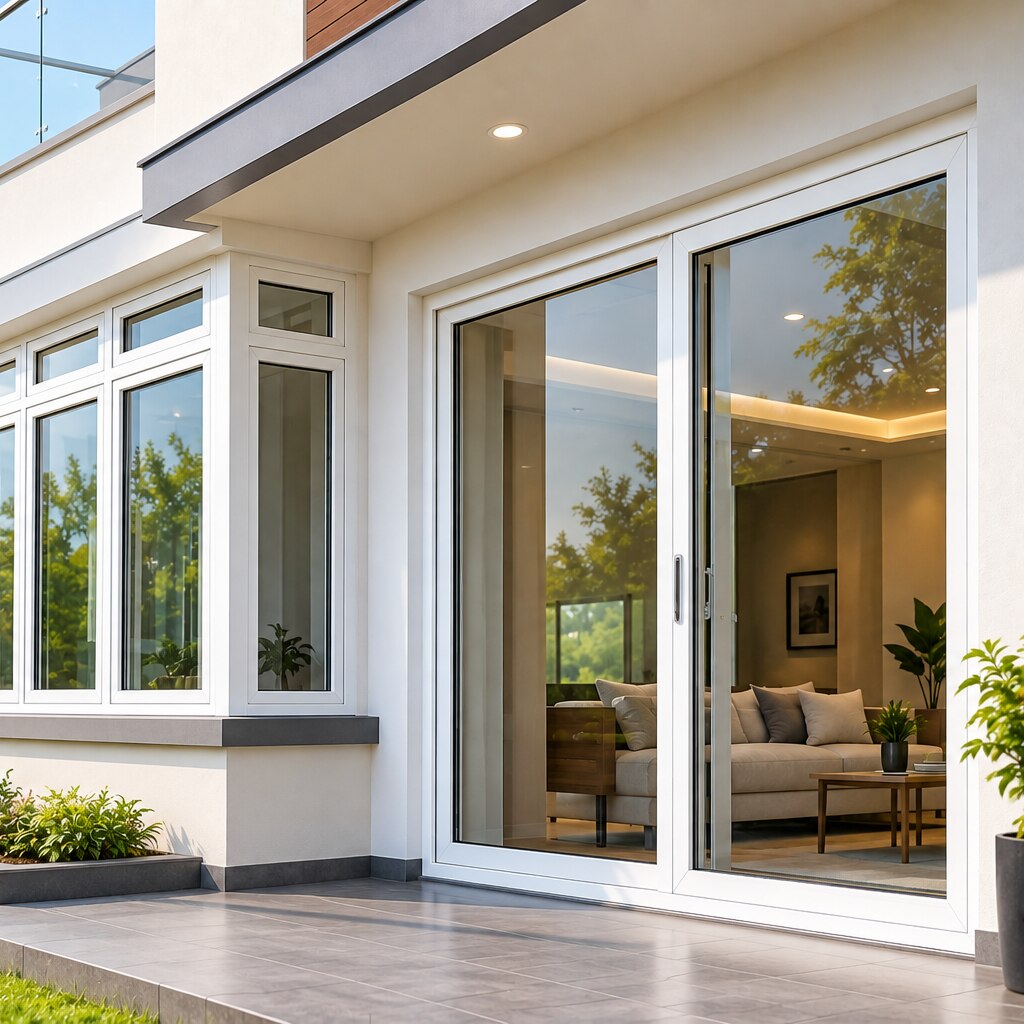
A UPVC label alone does not tell you whether a window will resist Pune’s monsoon, control solar heat, operate smoothly or last through repeated use. By examining the material, frame construction, glazing, installation and maintenance demands, you can compare UPVC with aluminium, timber and steel on evidence rather than appearance or sales claims.
Key takeaways
- Compare frame geometry, reinforcement and seals—not just the UPVC label.
- Choose glass by heat, glare and noise priorities, not appearance alone.
- Inspect drainage, sealing and frame alignment before accepting installation.
- Keep invoices, warranties, profile details and glass specifications after installation.
What makes UPVC competitive with aluminium, timber and steel?
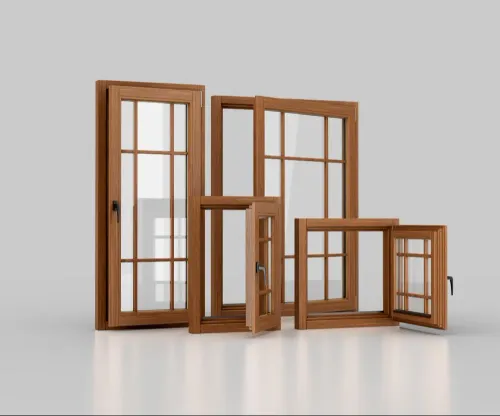
UPVC is becoming preferred because it balances thermal comfort, weather resistance and low upkeep without the corrosion of metal or routine refinishing of timber. Its rigid, unplasticized PVC profiles suit doors and windows, but performance still depends on profile geometry, wall thickness, reinforcement and sealing—not the material label alone.
| Material | Strengths | Trade-offs against UPVC |
|---|---|---|
| UPVC | Resists moisture and corrosion; needs little painting; provides good insulation | Requires correct reinforcement and careful installation; surface repairs are less straightforward |
| Aluminium | Slim sightlines, high rigidity and contemporary appearance | Conducts heat unless thermally broken; scratches and failed coatings are harder to disguise |
| Timber | Warm appearance, strong repairability and natural character | Needs regular sealing or painting; absorbs moisture and can swell, rot or warp |
| Steel | High strength and secure, narrow frames | Heavy, prone to corrosion at damaged coatings and weak in thermal insulation |
The UPVC versus aluminium choice often turns on sightlines and thermal performance comparison: aluminium wins for very slim profiles, while UPVC usually reduces heat transfer without relying on a thermal break. In the UPVC versus timber decision, choose UPVC when predictable upkeep matters more than natural texture and local repairability.
UPVC versus steel favours UPVC for residential comfort and corrosion resistance, while steel remains useful where exceptional strength governs.
Do not treat “100% recyclable” as a recovery guarantee; recycling depends on collection, separation and an available recycler. Select UPVC when balanced performance matters more than the thinnest frame, natural finish or maximum structural capacity.
What is inside a UPVC frame, and how do you judge its build quality?
Reliable performance starts with the profile system, not its glossy surface. Inspect the uPVC profile chambers, profile wall thickness, steel reinforcement, corner fabrication and hardware as one load path. Ask for a section drawing showing chamber layout, reinforcement location and the opening sizes covered by system testing.
- Confirm the steel reinforcement continues through the frame and sash where hardware and hinges transfer load. Large, dark-coloured or heavily glazed elements need correct reinforcement, fixing spacing and expansion allowance; otherwise sashes can drop or bind in strong sun.
- Examine weld quality and corner joints. Clean, fully fused corners resist water and air leakage; rough, overheated or visibly cracked joints are warning signs.
- Specify hardware by function, not appearance: multipoint locks, hinge load rating, corrosion-resistant finish, adjustable rollers and replacement availability. Weak hardware makes a rigid profile perform like a poorly fitted door.
- Check for EPDM or equivalent gaskets, proper drainage channels and mechanically fixed reinforcement. Expanding foam fills a gap; it does not replace anchors or weather seals.
| Detail | What to request | Failure if overlooked |
|---|---|---|
| Profile | Section drawing and stated wall thickness | Flexing, distortion and poor sealing |
| Reinforcement | Material, gauge, position and tested size range | Loose hardware or sash sag |
| Fabrication | Weld quality and corner joints | Leaks and cracked corners |
| Hardware | Brand, load rating and adjustment method | Binding, rattling or failed locks |
| Performance | Whole-window U-factor and air leakage result | Good glass undermined by the frame, seals or installation |
Which glass specification solves heat, glare and traffic noise?
Choose the glass by the dominant problem, because no single specification solves heat, glare and traffic noise equally well.
| Option | What it does | When it applies |
|---|---|---|
| Single glazing | One pane; lowest cost, but allows more heat transfer, glare and outside noise | Use only where thermal comfort and traffic noise are minor concerns |
| Double glazing | Two panes separated by a sealed air or gas gap; improves insulation, but results depend on glass, gap and spacer | Choose low-emissivity glass for heat control and a solar-control or tinted coating for glare |
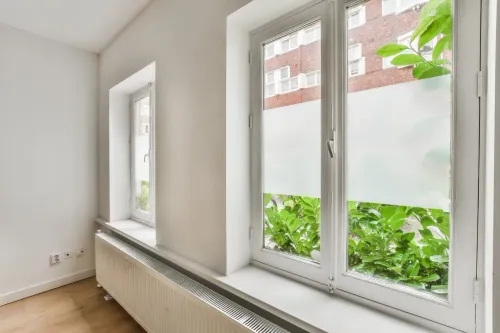
| Laminated glass | A plastic interlayer holds the panes together and can reduce traffic noise, especially with an acoustic interlayer | Select it for roadside rooms, security and better noise reduction |
| Toughened glass | Heat-treated safety glass that breaks into small pieces; it does not automatically improve insulation or sound control | Use near doors, low-level windows and impact-prone areas, often within double glazing |
| Acoustic glass | Usually laminated glass engineered for sound reduction, with specified thicknesses and interlayers | Request it when horns, buses or continuous road noise are the priority |
Do not accept “double-glazed” as a complete specification. Ask for the glass build-up, low-e coating, whole-window U-factor, SHGC and acoustic rating; asymmetric pane thicknesses, a wider sealed gap, continuous gaskets and careful installation can outperform a standard unit. A high-performance pane cannot compensate for air leakage around the frame.
How do Pune weather and installation quality affect UPVC performance?
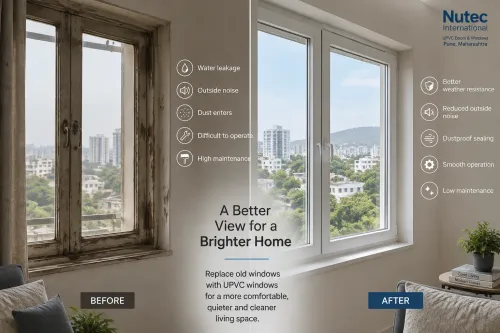
Pune’s monsoon weather exposes installation faults before the UPVC surface fails. Water enters through poorly sealed joints, incorrect sill falls, failed perimeter sealant, missing flashing or blocked drainage paths. That creates monsoon water leakage, damp reveals and mould around the opening.
UPVC installation quality depends on the frame staying square, level and plumb. The perimeter gap must be packed correctly, with mechanical anchors holding the frame to the wall; expanding foam alone cannot prevent movement or replace weather sealing.
Check these installation details before approving the work:
- Weep holes, drainage channels and sill outlets remain open and direct water outside.
- Frame fixing uses suitable anchors at the manufacturer’s specified spacing.
- Internal and external sealing materials suit both the wall and the finish.
- The sash closes evenly against continuous, undamaged gaskets.
- Flashing and sill slopes keep runoff away from the room.
Strong sun and heat also make expansion, warping and seal failure more likely when the frame lacks adequate support or the glass specification is unsuitable. Ask for the whole-window U-factor, which includes the frame, glazing, spacer and air leakage—not only the glass rating.
Traffic noise depends on sealed joints, glass thickness, laminated layers and air gaps. A standard UPVC frame alone will not block road noise. Clean the channels and inspect gaskets, hinges, rollers and locks after installation; a sound profile still leaks air or water when hardware and seals deteriorate.
What maintenance, documentation and supplier checks remain after installation?
Protect the investment with a written service plan, not a promise of “maintenance-free” performance. UPVC maintenance includes clearing drainage channels, washing tracks, checking gaskets, lubricating locks and rollers with manufacturer-approved products, and tightening or adjusting hinges. Dirt or a failed gasket can cause drafts and rainwater entry while the profile remains intact.
Before signing, ask for:
- A separate profile, glass, hardware and installation warranty, with duration, exclusions and the party responsible for each repair.
- The profile series, wall thickness, reinforcement specification, glazing build-up, gasket type and hardware brand.
- Evidence addressing BIS requirements for UPVC profiles and fabricated windows or doors, plus project-specific results for air permeability, watertightness, wind resistance and thermal performance.
- A whole-window U-factor, not only the glass value, and written confirmation that replacement rollers, locks, gaskets and glass units will remain available.
- The installation completion record, drainage inspection, sealant details and contact for future adjustments.
Nutec International, or any supplier, should be judged by whether it supplies these documents rather than by a catalogue profile name alone.
| Quotation item | Strong quotation | Warning sign |
|---|---|---|
| Profile | Series, dimensions and reinforcement identified | Brand name only |
| Glass | Thickness, type, spacer and U-factor stated | “Energy glass” without figures |
| Hardware | Brand, load rating and spare-parts route | Unnamed rollers or locks |
| Warranty | Separate terms and exclusions | One vague all-inclusive promise |
Related product
 | UPVC Doors and Windows - *Space-saving*: Perfect for small rooms or tight spaces - *Low maintenance*: No painting or polishing needed - *Energy-efficient*: Keeps your home... View product → |
Frequently asked questions
How does UPVC compare with aluminium, timber and steel?
UPVC offers thermal comfort, weather resistance and low upkeep without metal corrosion or timber refinishing. Compare each option for insulation, strength, maintenance and design requirements.
How can you judge the build quality of a UPVC frame?
Inspect the profile geometry, wall thickness, internal chambers, steel reinforcement, welded joints, hardware and sealing gaskets. Ask for profile and glass specifications rather than relying on the material name.
Which glass specification helps with heat, glare and traffic noise?
Select glass according to the main problem: solar-control glass reduces heat and glare, while laminated or thicker insulated glass helps reduce traffic noise. Check the pane thickness, air gap and coating details.
How do Pune weather and installation affect UPVC performance?
Rain, dust, heat and monsoon humidity make drainage, exterior sealing, frame alignment and correct fixing important. Poor installation can cause water leakage, air gaps and reduced acoustic performance.