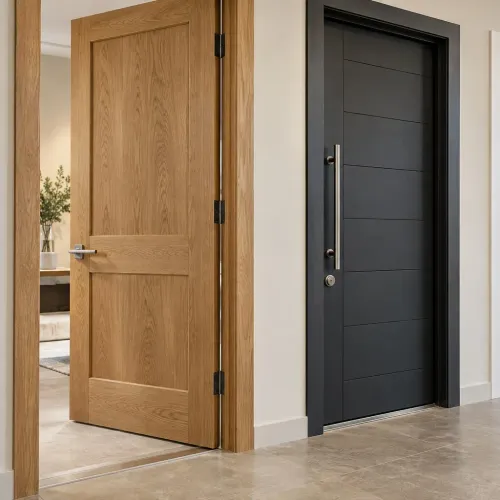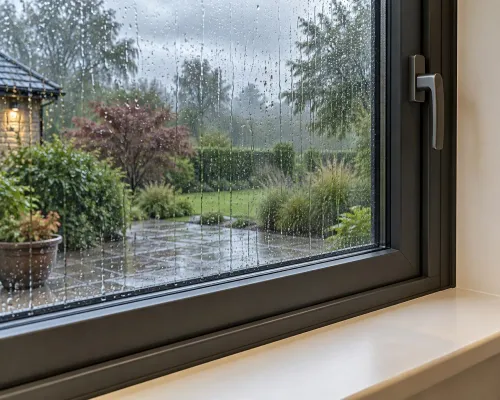

Road dust enters commercial interiors through more than the visible glass edge: meeting rails, flattened seals, installation joints, tracks and open ventilation paths all matter. You will be able to inspect an installed window, compare alternatives and specify a practical dust-control setup for your type of premises.
Key takeaways
- Ask for tested air-infiltration results, the test standard and specimen size.
- Inspect interlocks, brush seals, drainage paths and frame-to-wall joints.
- Compare sliding windows with casement, fixed and tilt-and-turn systems.
- Balance low-dust glazing with safe ventilation and practical cleaning access.
What “dustproof” should mean in a commercial window specification
“Dustproof” should mean controlled air leakage, not a label. For dustproof upvc sliding windows for business premises in pune, specify a tested air-infiltration class or measured air-infiltration rate, the test standard, and the specimen size. A result from a small laboratory sash does not prove that a large shopfront will perform well after installation.
Dust enters through more than the glass edge. Require continuous EPDM or equivalent gaskets where designed, intact brush-pile seals, tight sash-to-frame overlaps, interlocking meeting rails, sealed corner joints, and locking points that pull the sash evenly against its seals. Include installation tolerances; a twisted frame can leave gaps even when the window profile is sound.
Your specification should identify these maintainable details:
- Replaceable gaskets or brush seals, with removal possible without taking out the sash
- Adjustable rollers and accessible hardware, so the sash closes evenly along its full height
- Cleanable tracks and removable covers, without cavities that trap dust
- A sloped or adequately drained sill, raised track geometry, and clear weep holes
- Tested water-resistance results alongside air-infiltration results
When comparing commercial dustproof windows in Pune, reject claims such as “airtight” or “heavy-duty” without test evidence. A mosquito mesh stops insects, not fine particulate matter, and it is not a dust filter. Specify separate tested filtration or air-cleaning equipment if particulate reduction is essential.
How to inspect sliding window sealing for dust
A bright-light check reveals many dust leaks: with the sash closed and locked, shine a torch from the opposite side and inspect the meeting rail, corners and perimeter for visible daylight. Repeat this on every sash.
1. Operate each sash through its full travel. Uneven resistance, scraping or a sash that lifts away from the track indicates roller, alignment or frame problems. After locking, push the sash gently; movement, rattling or a loose meeting rail means the seals are not being held evenly.
2. Examine the sliding window sealing for dust at eye level and with the sash open. Look for torn, loose or flattened brush seals, gaps in pile weatherstripping, and damaged EPDM gaskets. Check that the sash closes evenly along its full height rather than touching at one corner first.
3. Look along the sill and track for dark dust tracks, powder collected at corners or water marks. Dust lines identify an air path; water marks point to poor drainage, failed seals or an incorrectly levelled sill. Confirm every sill drain hole is open and not covered by sealant.
4. On a new installation, place a thin paper strip between the closed sash and seal at several points. Similar resistance along the height indicates consistent contact; a strip that pulls out freely identifies a weak section.
For dust-resistant sliding windows in Pune, record these findings at handover. They catch installation faults, but only a tested air-infiltration result can quantify performance; a clean visual inspection is not a laboratory air-leakage test.
Sliding windows versus other commercial window systems
Choose a sliding window when you need regular ventilation without a sash projecting into a customer aisle, work zone, or narrow setback, and when easy horizontal operation matters more than maximum sealing. For upvc windows for shops and offices, compare tested air-infiltration and water-resistance results, the named test standard, and specimen size.
“Dustproof” alone proves nothing; a small laboratory specimen cannot predict a large shopfront or poor installation.
| Option | Sealing and dust control | Opening, access and upkeep | Best choice |
|---|---|---|---|
| UPVC slider | Weaker than a comparable casement because overlapping sashes do not compress continuously | Convenient ventilation, no projection, tracks need cleaning | Narrow commercial interiors |
| Casement | Tighter compression seal and stronger weather resistance | Wide opening, but needs swing clearance and hardware servicing | Road-facing rooms prioritising dust reduction |
| Fixed pane | Strongest seal because it does not open | No ventilation; simple cleaning from inside only if reachable | Daylight beside a separate ventilator |
| Aluminium slider | Similar sliding limitations; thermal frames can feel less comfortable | Light operation and slim sightlines; inspect worn rollers and seals | Budget-led replacement where sealing is secondary |
| Sealed glass partition | Excellent internal separation, but not an exterior weather barrier | No ventilation; cleaning is straightforward | Dividing conditioned office areas |
For commercial dustproof windows in pune, choose a slider only with continuous pile or EPDM seals, an interlocking meeting stile, aligned sashes, raised drained tracks, and accessible weep holes. Reject one that rattles, leaves daylight at the meeting rail, or needs force to close.
If dust exposure dominates, choose a casement; if ventilation is unnecessary, choose a fixed pane.
Choosing glass, ventilation and layouts for Pune premises
Choose glass and opening size by exposure, not by daylight alone. For dust resistant sliding windows in Pune, use laminated glass where break-in or injury risk matters, and solar-control glass on hot west- or south-facing elevations; clear glass gives more daylight but increases glare and heat.
Keep one opening for controlled fresh air rather than leaving several sashes partly open.
| Premise | Glass and ventilation choice | Layout and safety |
|---|---|---|
| Retail shop | Laminated or toughened glass; open only during low-dust periods | Keep the display zone behind the sealed line; avoid wide openings at the pavement |
| Street-facing office | Solar-control glass with a small operable section | Put desks away from the sill and use a casement for rooms needing stronger sealing |
| Clinic | Laminated glass with smooth, cleanable surfaces | Separate patient areas from the opening; provide controlled ventilation without a dust-laden full-width opening |
| Warehouse | Toughened glass for daylight; high-level vents where feasible | Use fixed panes above storage and protect lower windows from impact |
| Restaurant | Solar-control glass; coordinate openings with kitchen exhaust | Do not use windows as a substitute for extraction; place seating away from road-facing openings |
| Upper-floor room | Laminated glass and restrictor stays | Limit opening width where falls are possible, while retaining an emergency egress route |
For upvc windows for shops and offices, select a layout that leaves fewer sashes exposed to wind-driven dust. Check these details before ordering:
- Use fixed glass where ventilation is unnecessary.
- Choose casements for rooms requiring tighter compression seals.
- Keep sliding tracks accessible for vacuuming, and specify removable insect screens where windows stay open.
- Confirm restrictors, laminated glass and safe cleaning access on upper floors.
How to specify and maintain a dust-resistant commercial installation
Specify dustproof UPVC sliding windows for business premises in Pune by measured performance, not a label. Ask for the air-infiltration result, water-resistance result, test standard, pressure, and specimen size. A small laboratory sample cannot prove that a large shopfront will perform well after installation.
1. Ask the supplier to identify the air-leakage class or measured infiltration rate and the water test used, such as ASTM E283 for air leakage and ASTM E331 for water penetration. Require the quotation to include perimeter seals, meeting-rail seals, drainage holes, frame anchoring, installation tolerances, and the sealant or foam used against masonry.
2. Make sliding window sealing for dust a replaceable system. Confirm that pile weatherstripping or EPDM gaskets can be changed without removing the sash, that rollers and adjustment points are accessible, and that the track can be vacuumed and washed.
3. Inspect the installed frame after fitting. Reject visible corner gaps, daylight around the sash, loose or flattened seals, dust lines on the sill, water marks, wind rattling, and rollers that move unevenly or leave the sash loose at one end.
4. Specify a sloped, drained sill with raised track geometry and reachable drainage openings. Schedule cleaning before the monsoon and service at a defined interval; remove dust-and-water slurry promptly because it blocks drainage and wears seals.
When comparing commercial dustproof windows in Pune, Nutec International should record these test results and service provisions in the handover documents, rather than leaving “dustproof” as an unverified promise.
Related product
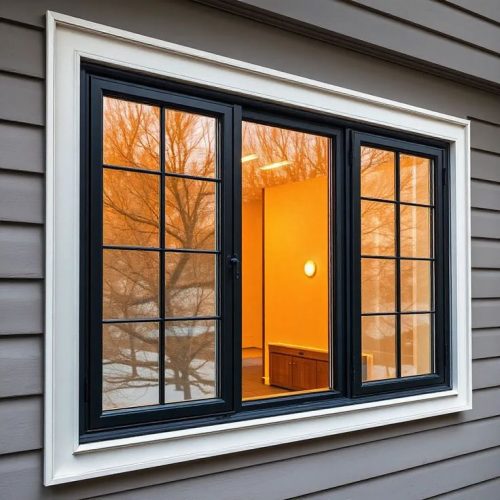 | UPVC Doors and Windows - *Space-saving*: Perfect for small rooms or tight spaces - *Low maintenance*: No painting or polishing needed - *Energy-efficient*: Keeps your home... View product → |
Frequently asked questions
What should “dustproof” mean in a commercial window specification?
Specify a tested air-infiltration class or measured air-infiltration rate, the test standard and the specimen size. A small laboratory sash does not prove that a large shopfront will perform well after installation.
How can you inspect sliding window sealing for dust?
Check the meeting-rail interlock, brush seals, corner joints, drainage slots and the frame-to-wall seal. Look for continuous contact, damaged seals, blocked drainage paths and gaps around the installed frame.
Are sliding windows the best choice for every commercial premise?
Compare their space-saving operation and limited opening area with casement, fixed and tilt-and-turn systems. Choose based on dust exposure, ventilation needs, access, cleaning and the available operating space.
How should you choose glass, ventilation and layouts for Pune premises?
Match glazing to heat, glare, noise and safety needs, then provide controlled ventilation without creating an unfiltered dust path. Keep opening panels accessible and avoid layouts that make seals or tracks difficult to clean.
How do you specify and maintain a dust-resistant commercial installation?
Record the window dimensions, air-leakage requirement, glass specification, seal types, installation joint details and inspection steps. Clean tracks and drainage paths, inspect seals and hardware, and repair gaps before dust enters the room.
Keywords