UPVC sliding windows can suit Pune classrooms, offices and institutional buildings, but only when the complete window system is designed for safety, ventilation, monsoon exposure, cleaning and repeated use. By the end, you will be able to distinguish a residential-grade proposal from an institutional specification, identify the tests and documents to request, and recognise locations where another window type is safer or more effective.
Key takeaways
- Use sliding windows for ventilation without projecting sashes into corridors.
- Avoid them where laboratories need extraction or exits need wide clear openings.
- Specify restrictors, safety glazing, drainage and hardware in the tender.
- Plan track cleaning, seal checks and replacement access before installation.
Where sliding windows fit—and where they do not
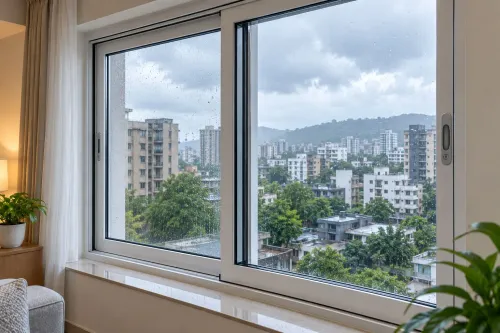
Sliding windows for institutions suit classrooms, offices, libraries and administrative rooms where occupants need regular ventilation without projecting a sash into a corridor. They are a poor choice for laboratories requiring controlled extraction, rooms needing near-total acoustic isolation, or openings that must provide a wide, unobstructed emergency exit.
Match the configuration to the opening and the daily routine:
- Use a two-track window for modest openings and limited ventilation; only part of the frame opens, so the free ventilation area is smaller than the overall window.
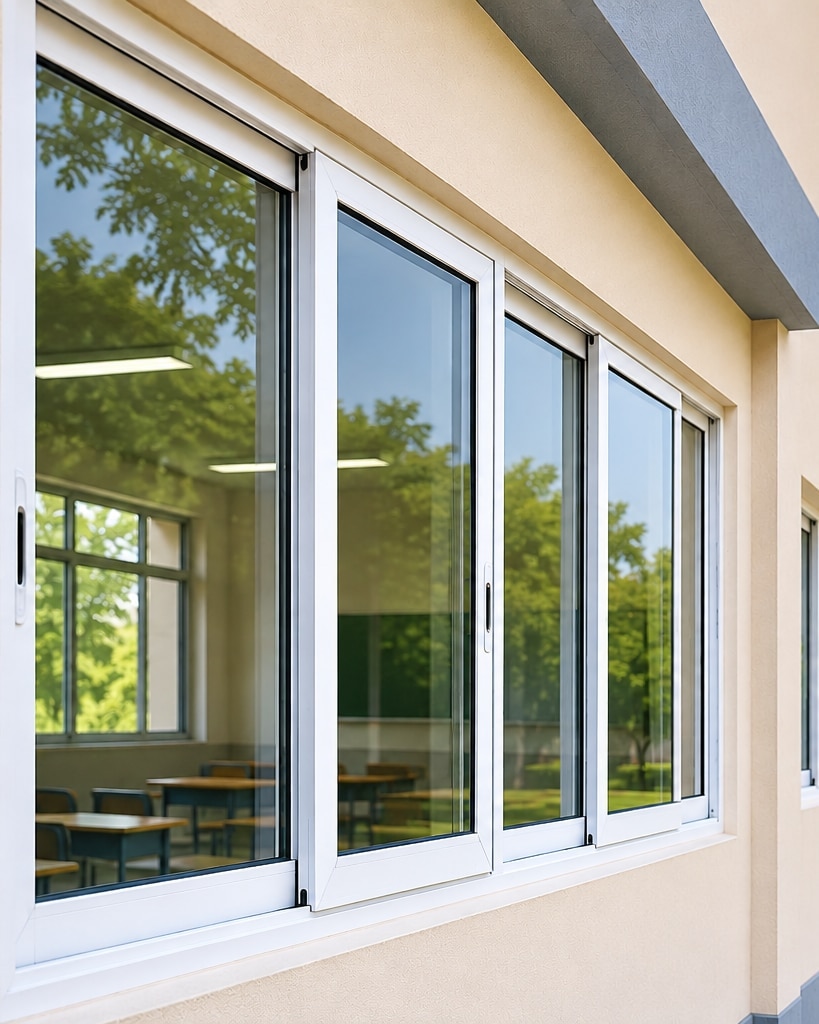
- Use a three-track or multi-panel arrangement for wider classroom openings, but specify reinforced profiles, durable rollers and locking points because larger sashes weigh more and face more cycles.
- Combine fixed panels with sliding sashes where daylight is important but full opening is unnecessary. Fixed glass improves airtightness and noise control.
- Provide restrictors or child-safe handles on upper floors when supervision requires them, but confirm that they do not block rescue or fire-escape access.
- Choose inward-opening casements or tilt-and-turn windows where cleaning, directed airflow or a larger clear opening matters more than corridor clearance.
Avoid placing the operating sash behind furniture or at a height staff cannot safely reach. In a school, a window opened several times each day needs replaceable rollers, accessible tracks and handles that children cannot easily misuse.
A sliding window also provides less dust and traffic-noise control when open, and it cannot compensate for inadequate mechanical ventilation in a laboratory or hospital room.
The safety specification schools cannot leave to the supplier
A school must approve the safety specification, not leave it to the window supplier. For upvc windows for schools in pune, define the complete opening: glazing, restrictors, guards, locks, handles, ventilation route and emergency-access method.
1. Specify toughened or laminated safety glass for low-level, door-adjacent and circulation-area panes, with visible manifestation on large glass areas. Require compliance with IS 2553; ordinary annealed glass can cause serious cuts when a child falls against it.
2. Control falls and unauthorised opening with window restrictors, child-safe handles or guards on upper floors. Confirm the release method and supervision procedure, because a restrictor that blocks a required escape or rescue opening creates a life-safety failure.
3. Remove finger-trap points at meeting stiles, sash edges and accessible tracks. Require an anti-finger-trap detail, protected closing gaps and hardware that children cannot easily defeat.
4. Draw the required clear emergency opening on the plan and coordinate it with the National Building Code of India and the local approving authority. Do not install fixed security grills across that opening unless the authority accepts a releaseable, escape-compatible design.
5. Specify ventilation separately from window security. A shut window reduces dust but raises carbon dioxide, heat and odour; provide cross-ventilation, filtered mechanical ventilation or both, while keeping handles and controls usable for people with mobility limitations.
Record these decisions in the tender drawings and room schedule. A supplier’s standard residential configuration is not evidence that the installation meets fire, building-control, accessibility or institutional safety duties.
How to control Pune dust, rain, heat and traffic noise
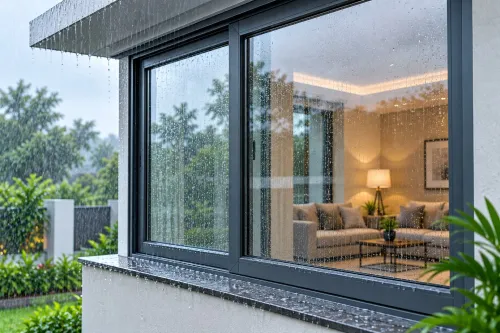
uPVC sliding windows can protect Pune classrooms from dust, monsoon rain, heat and traffic noise, but only as a complete assembly. A basic residential unit will not deliver the same result as a reinforced frame, quality seals, suitable glass, external shading and correctly sealed installation.
1. Specify multi-chamber, UV-stabilised profiles with adequate wall thickness and reinforcement. Low-quality uPVC can discolour, become brittle or deform in prolonged sun.
2. Control dust at every leakage point: require continuous wool-pile seals, a close-fitting interlock, sealed frame-to-wall joints and clean drainage channels. Treat the phrase dustproof windows for schools as a claim to verify, not a performance standard.
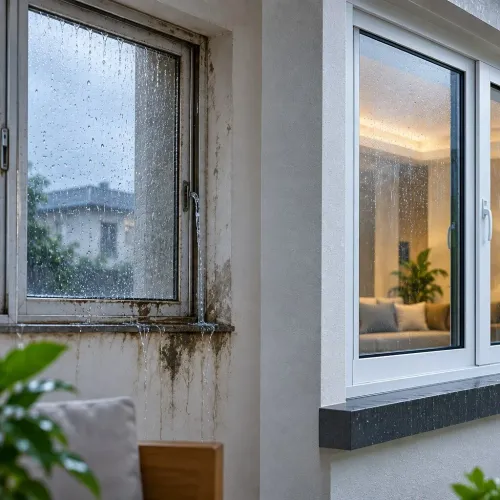
3. Make rainwater leave the frame. Check for sloped outer sills, unobstructed drainage channels and correctly positioned weep holes; blocked outlets can push monsoon water indoors.
4. Reduce solar heat with external overhangs, fins or blinds on west and south-west elevations. Add solar-control glass or low-emissivity insulated glazing where heat remains high; a thicker uPVC frame alone will not stop sunlight through the glass.
5. For traffic noise, choose laminated glass with an acoustic interlayer or an insulated-glass unit with a useful air gap. Thin single glazing and an open sash provide limited isolation, while worn seals and poor perimeter sealing undermine good glass.
Keep windows closed during dusty or noisy periods, but provide cross-ventilation, filtered mechanical ventilation or both. Otherwise carbon dioxide, heat and odours rise indoors despite a tightly sealed window. Verify air, water and wind test results for the installed size, not just the profile.
What an institutional window tender should specify
An institutional tender should buy a documented window system, not a quotation that says only “uPVC sliding window.” For upvc sliding windows for institutions in pune, require one schedule covering the frame, sash, glass, hardware, installation and after-sales support. Nutec International should be compared against that same schedule, not against a generic residential product description.
- State the profile class, external and internal wall thickness, UV stabilisation, reinforcement material and reinforcement thickness. Identify whether steel is galvanised and where it sits inside each profile.
- Specify two-track, three-track or multi-panel layouts, maximum sash dimensions, roller type, track material, locking points, handles, restrictors, hardware cycle rating and corrosion-resistance test.
- Name the glazing: thickness, toughened or laminated safety glass under IS 2553, insulated-glass build-up, acoustic interlayer and visible manifestation where required.
- Limit the project to standardised sash and frame sizes, then require coordinated shop drawings showing elevations, sections, fixing points, drainage paths and opening directions.
- Demand air, water and wind test reports to EN 12207, EN 12208 and EN 12210, or named equivalent Indian tests, plus installation tolerances, compatible sealants and weep-hole locations.
| Proposal item | Acceptable evidence | Reject or clarify |
|---|---|---|
| Profile | Section drawings and wall measurements | “Heavy-duty” without figures |
| Hardware | Cycle rating, corrosion test and spare-part list | Unnamed rollers or locks |
| Warranty | Term, exclusions and response time | Warranty covering only the frame |
| Service | Stocked replacement glass, rollers and locks | No local repair commitment |
| Installation | Method statement and completion inspection | Installation left to an unnamed subcontractor |
Related product
 | UPVC Doors and Windows - *Space-saving*: Perfect for small rooms or tight spaces - *Low maintenance*: No painting or polishing needed - *Energy-efficient*: Keeps your home... View product → |
Planning installation, cleaning and long-term repairs
Install by zone, not across an occupied floor. Use sealed dust barriers, protect desks and medical equipment, and schedule noisy removal after hours. Remove old frames carefully so plaster and waterproofing are not torn; inspect the opening before fitting, because a damaged sill or oversized gap will cause leakage and movement.
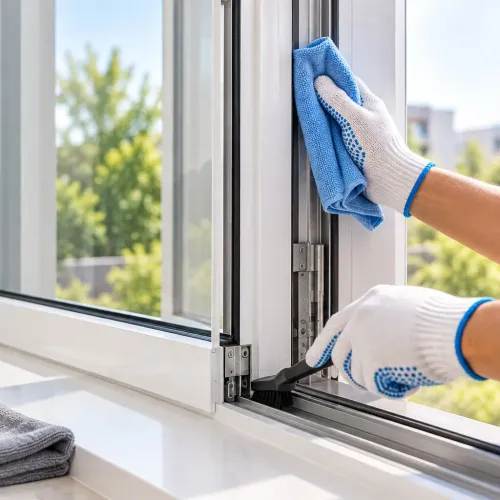
Close each room at the end of the shift. Vacuum debris from tracks, wash with mild detergent, and dry before reopening the area. Never use abrasive powder, drill into the sill, or cover drainage holes with silicone; each practice damages surfaces or traps water inside the frame.
Put these tasks on the facilities schedule:
- Inspect wool-pile seals for flattening, gaps and detachment.
- Test locks and meeting-stile alignment after heavy use.
- Lubricate rollers with the hardware maker’s recommended product.
- Replace rollers that drag, wobble or leave the sash misaligned.
- Clear drainage holes with a soft brush or plastic probe.
Keep spare rollers, wool-pile seals, locks, handles, drainage covers and matching glass dimensions on site. Standardising sash sizes and hardware lets a school or hospital repair one failed window without waiting for a special order.
| Choice | Maintenance and access implication | Better fit |
|---|---|---|
| Sliding | Clean tracks and replace rollers; opening does not project inward | Classrooms and offices with tight furniture layouts |
| Casement | Hinges and restrictors need inspection; opens wide for cleaning | Rooms needing stronger ventilation or emergency access |
| Tilt-and-turn | More hardware points require adjustment | Hospitals and offices needing controlled ventilation |
| Top-hung | Reach and cleaning access need planning | High-level ventilation |
| Aluminium | Needs corrosion-resistant hardware and thermal-break design | Large, rigid openings or heavy-use institutional areas |
Frequently asked questions
Where are sliding windows suitable in schools and institutions?
They suit classrooms, offices, libraries and administrative rooms that need regular ventilation without projecting sashes into corridors.
When are sliding windows the wrong choice?
Choose another window type for laboratories requiring controlled extraction, rooms needing near-total acoustic isolation, or openings used as wide emergency exits.
What safety requirements should a school window tender include?
Specify opening restrictors, safety glazing, secure locks, child-safe operation, drainage, and hardware that staff can inspect and replace.
How can institutions manage Pune dust, rain, heat and traffic noise?
Specify effective seals, correctly designed drainage, suitable glazing, tight installation details, and a cleaning and inspection schedule for tracks and seals.
Keywords