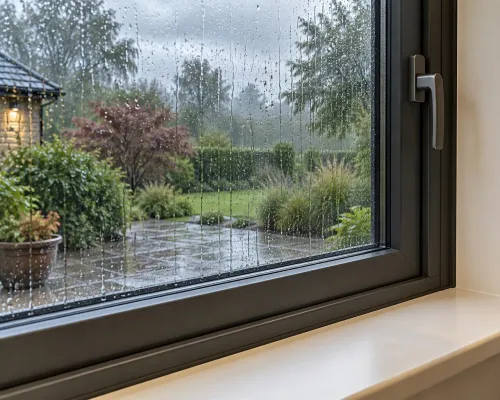

Dust enters through more than an open pane: worn gaskets, sliding-track gaps, frame-to-wall joints and unsealed drainage paths all create routes for outdoor particles. By the end, you will know how to inspect those routes, operate and clean the window correctly, compare alternatives, and judge whether an installer’s dust-control claims are meaningful.
Key takeaways
- Inspect seals, frame joints, drainage openings, and masonry gaps for dust entry.
- Choose casement windows for tighter closure or sliding windows for easier ventilation.
- Clean tracks, gaskets, and drainage channels without damaging seals.
- Ask suppliers for air-leakage test results and installation details, not just dustproof claims.
Where Dust Enters Around a Window
A window does not admit dust through glass; it admits it through openings around the glass and frame. Dust entry through window gaps occurs at worn uPVC window seals, poorly fitted sliding sashes, unsealed frame joints, trickle vents, drainage openings and the perimeter where the frame meets masonry.
A dust-resistant window assembly reduces uncontrolled airflow when the sash is closed and its gaskets, locking points, glass seals and installation joints remain continuous. It cannot make a room dust-free. Open the window and outdoor grit enters directly; run an exhaust fan and negative pressure can pull air through a tiny defect or frame-to-wall gaps.
| Leakage point | Dust route | What a sealed window can prevent |
|---|---|---|
| Open sash | Outdoor grit and fine particles enter directly | Nothing while the sash remains open |
| Sash seals and meeting rails | Air passes around worn gaskets or a poorly adjusted slider | Most leakage through the closed sash |
| Frame-to-wall gaps | Dust bypasses the frame through an unsealed masonry joint | Infiltration at the installation perimeter |
| Drainage openings | Dust enters through designed drainage paths or damaged covers | Direct entry only when the drainage design includes a sealed barrier |
Visible grit is easier to block than PM2.5, particles 2.5 micrometres or smaller. A high-efficiency filter cannot correct a leaky frame: it filters air that reaches it, while air entering around the window bypasses the filter. Even a well-sealed window leaves dust sources at doors, balconies, construction areas and indoor activity.
What to Inspect Before Calling a Window Dustproof
A window deserves a dust-limiting label only when its moving parts, frame joints and wall connection form a continuous seal. uPVC is not a dust filter; its benefit comes from replaceable gaskets, sealed profiles and correctly adjusted hardware.
Inspect the unit for these physical clues:
- EPDM gaskets or rubber seals should run continuously around the sash, with no flattening, cracks, missing sections or visible gaps.
- Sliding sashes should have intact brush seals, close firmly against the frame and meet without a visible gap at the interlocking meeting rails.
- Locking points should pull the sash evenly onto its seals. A loose handle or uneven compression leaves a leakage path.
- The glass-to-frame joint should be neat and continuous, without failed sealant or movement.
- Drainage slots and weep holes must remain open. They remove water, but blocked or poorly formed openings can cause dampness and force air through unintended gaps.
Check the installation separately from the window.
| Inspection area | What indicates good installation | Warning sign |
|---|---|---|
| Frame-to-wall joint | Continuous sealant around the reveal, with the frame packed firmly | Open gaps, discontinuous sealant or movement |
| Expanding foam | Used as insulation behind a finished weather seal | Foam exposed as the only seal |
| Air leakage evidence | A tested air-permeability result under EN 1026, classified under EN 12207 | “Dustproof” claimed without test evidence |
A good frame can still leak if the masonry opening was poorly prepared.
How to Operate and Clean Windows for Lower Dust Entry
Keep the sash closed during construction, dry windy weather, or local traffic peaks; opening it brings outdoor dust directly indoors. Ventilate through mechanical ventilation with a suitable filter, or use a portable air cleaner sized for the room. Do not add a high-resistance filter unless the fan can handle its pressure drop.
1. Inspect EPDM or rubber gaskets every three months. Look for flattening, cracks, loose sections, and visible gaps; replace damaged seals before they create a leakage path.
2. Close and lock the sash fully. The locks should pull it evenly against the gasket rather than leaving one corner loose. A misaligned sliding sash can leak air even when the glass and frame look intact.
3. Clean sliding window tracks by first vacuuming loose grit. To vacuum window tracks, use a narrow nozzle, then wipe the channel with a damp cloth and dry it. Do not pack the track with grease or debris.
4. Check window drainage holes during each track cleaning. Clear dust and insects with a soft brush or plastic pick, but never seal or block these openings; trapped water can damage seals and surrounding finishes.
5. Remove and wash insect mesh separately, then clean its frame and channel. Insect mesh and dust are not the same problem: ordinary mesh stops insects but does little to capture fine particles such as PM2.5.
Wipe gaskets with clean water and a mild detergent, then dry them. Replace a seal that remains compressed or cracked; cleaning cannot restore its airtight shape. Also check the wall-to-frame joint for cracking and arrange repairs before dust enters around the reveal.
Which Window Type Fits Your Dust and Ventilation Needs?
A fixed pane gives the fewest leakage points, but it cannot provide natural ventilation. Choose an operable window only where you can balance airflow against outdoor dust, pressure from exhaust fans and the frequency of opening.
| Option | Airtightness | Ventilation and access | Cost and large openings |
|---|---|---|---|
| Fixed glazing | Usually strongest because it has no sash, tracks or meeting rail to leak. The frame-to-wall joint still needs sealing. | No ventilation; clean the glass from inside only if the pane is reachable. | Often economical per pane, but a separate ventilating section is needed. Suits large views. |
| Casement | Compression gaskets press against the frame when locked, giving better sealing than many sliders. | Good controlled ventilation; the opening side is accessible for cleaning. | Mid-range; multiple casements can create wide openings, but hardware and mullions add cost. |
| Sliding | Brush seals, running tracks and the meeting rail create more leakage paths. Casement versus sliding windows is mainly a sealing-versus-opening-size choice. | Large clear openings and easy operation; tracks collect dust and can be difficult to clean. | Often cost-effective for wide openings, especially balconies. |
| Aluminium | The material is not the seal. Thermally broken profiles, continuous gaskets and adjusted locks improve performance. | Available in fixed, sliding and casement forms; cleaning depends on that design. | Slim frames suit large openings, while higher-spec systems cost more. |
| Retrofit-sealed | Retrofit window sealing can close perimeter gaps and replace worn gaskets, but it cannot correct a warped frame. | Keeps the existing operation and ventilation; inspect tracks and seals afterward. | Usually cheaper than replacement, with limited gains on badly fitted windows. |
How to Test a Supplier’s Dust-Control Claims
Treat “dustproof” as a marketing description until the supplier shows air-leakage evidence for the complete window assembly, not just the glass or sash. Air leakage is not the same as dust removal: a test indicates how much uncontrolled air passes through gaps, while fine PM2.5 can still enter through open windows, vents and other routes.
Ask for these documents before comparing quotations:
1. A test report identifying the window model, frame material, dimensions, seals and test pressure. Accept an EN 1026 air permeability test or ASTM E283 report; a brochure without test conditions is not equivalent.
2. The declared EN 12207 air leakage class, including whether the result applies to the complete tested unit. Ask the supplier to explain what changes if your window is larger or uses a sliding sash.
3. Installation evidence for your property: the perimeter sealing method, reveal preparation, drainage details and photographs taken before plaster or trim covers the joint. Expanding foam alone is not a finished weather seal.
4. A written window installation warranty stating the coverage period, exclusions and remedy for frame-to-wall leakage, failed gaskets and adjustment problems. Get maintenance obligations in writing.
Nutec International can help you make the comparison meaningful by asking for the test report and installation warranty for the exact uPVC configuration quoted, rather than accepting a general claim about its product range. Reject a supplier who offers only words such as “airtight” or “dustproof” and no model-specific evidence.
Related product
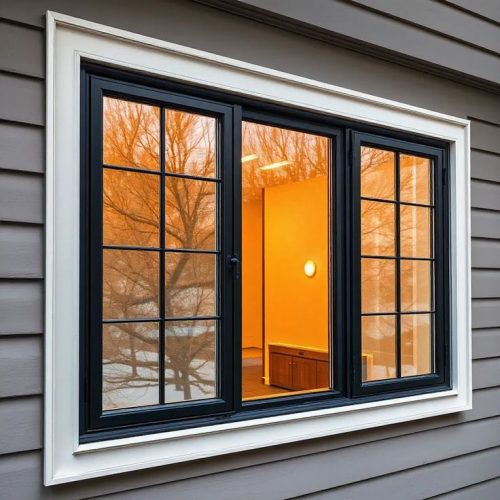 | UPVC Doors and Windows - *Space-saving*: Perfect for small rooms or tight spaces - *Low maintenance*: No painting or polishing needed - *Energy-efficient*: Keeps your home... View product → |
Frequently asked questions
Where does dust enter around a window?
Dust enters through worn seals, poorly fitted sliding sashes, unsealed frame joints, trickle vents, drainage openings, and gaps between the frame and masonry.
What should you inspect before calling a window dustproof?
Check the condition of the gaskets, the fit of each sash, frame corners, drainage holes, vents, and the sealant around the frame perimeter.
How do you operate and clean windows to reduce dust entry?
Close the sash fully, keep seals free of grit, vacuum sliding tracks, wipe gaskets with a damp cloth, and clear drainage channels without blocking them.
Which window type suits dust and ventilation needs?
Casement windows usually provide a tighter compression seal when closed, while sliding windows offer convenient ventilation but need clean tracks and accurate sash alignment.
How can you test a supplier’s dust-control claims?
Request the window’s air-leakage test result, gasket specifications, installation method, drainage design, and a written explanation of how the frame-to-wall joint is sealed.