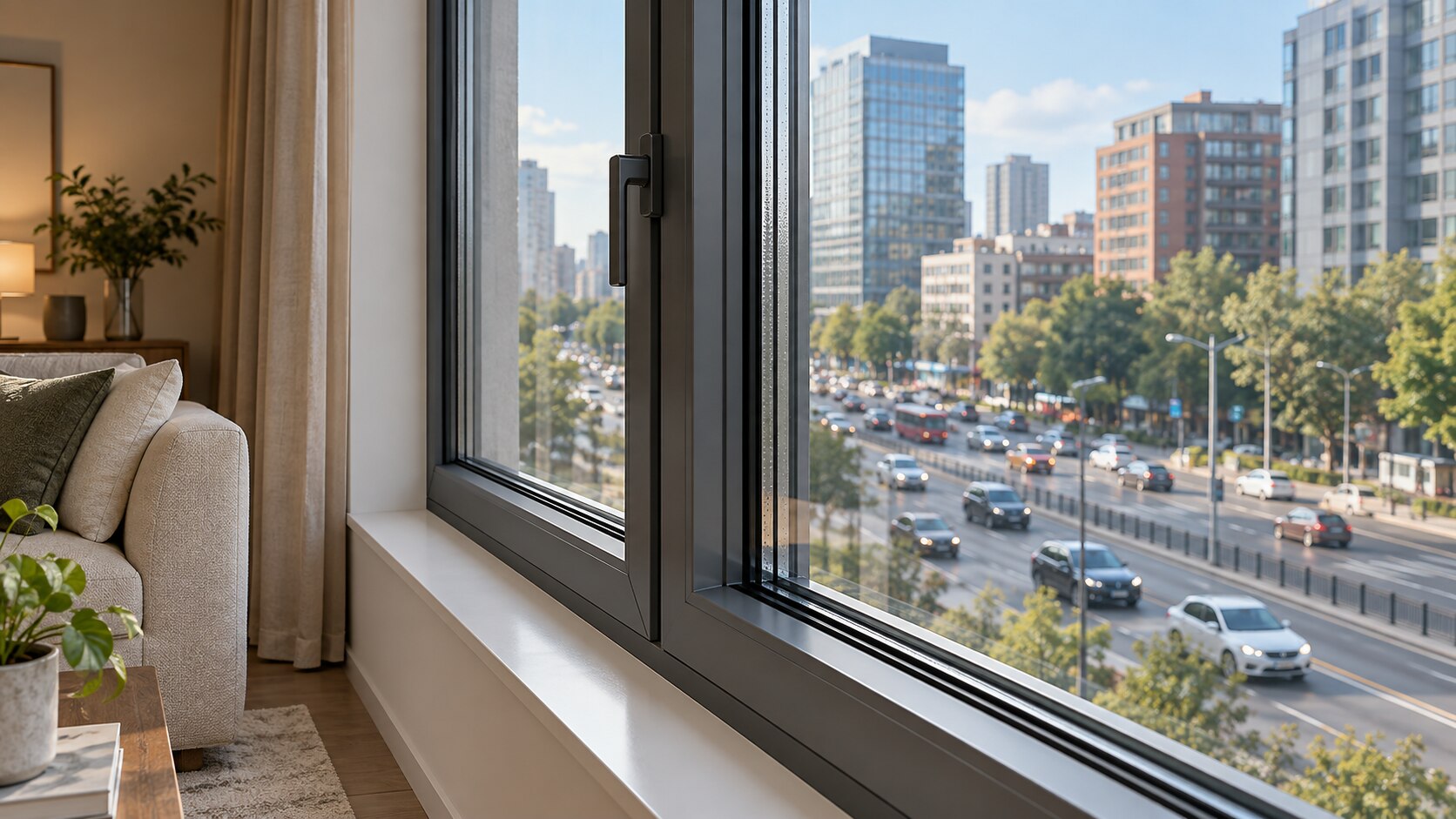
A window can reduce traffic, voices and high-frequency street noise, but it cannot make a room silent when sound also travels through doors, walls, vents or the roof. By the end, you will know how to identify the real noise path, compare window designs and specify an installation that delivers a measurable improvement.
Key takeaways
- Identify the noisiest hours and trace whether sound enters through glass, gaps, walls, or doors.
- Ask for acoustic test data showing the window’s Rw and low-frequency correction values.
- Choose laminated glass and sealed frames for traffic noise; fix gaps before upgrading glass.
- Expect limited improvement when sound bypasses the window through walls, doors, roofs, or vents.
Start by Finding the Noise Path and the Worst Hours
Not necessarily: a window is the main reason only when it is the weakest sound path into the room. A sealed upgrade can expose a weak wall or door; the room then sounds only slightly quieter even though the glass performs as tested.
Begin an outside noise assessment at the times the room is most disturbing. Record the outdoor sound level and indoor sound level at the same location, using the same A-weighted meter setting, during peak noise periods.
Compare with the window closed and open; a large change points to the window or its seals, while a small change points to flanking paths.
Check these routes before ordering expensive glazing:
- Gaps around the frame, an open sash, or an open air vent
- A hollow door, lightweight roller-shutter box, ceiling, or shared wall
- Vibration through the wall from heavy vehicles or construction
India’s ambient limits are outdoor standards: residential zones are 55 dB(A) by day and 45 dB(A) at night; commercial zones are 65 and 55. They do not promise those indoor levels after replacement.
If ventilation requires an open sash, it creates a direct sound path; specify an acoustic trickle vent, duct silencer, or mechanical ventilation instead.
Understand What a Soundproof Window Rating Actually Measures
A soundproof window rating predicts performance only when it identifies the noise spectrum, test method and tested assembly. A single “30 dB reduction” claim is incomplete: it could describe one frequency, a weighted laboratory value or glass alone, not the finished window.
| Rating | What it measures | Best use |
|---|---|---|
| STC | Airborne sound across a defined laboratory frequency range | Comparing indoor partitions and windows, but not directly predicting road traffic |
| OITC | Exterior noise with greater weight on low frequencies | Comparing windows exposed to traffic, trucks or aircraft |
| Rw rating | Weighted airborne sound insulation under a laboratory standard | Comparing tested products when the standard and complete specimen are stated |
| Single dB claim | Unclear unless the frequency, weighting and test method are supplied | Reject it as a buying figure until the supplier documents its meaning |
For a busy road, OITC is generally the more useful starting point because engines and heavy vehicles produce low-frequency noise that STC does not weight in the same way. Ask for the test standard, specimen size and rating type, then confirm that the result covers the complete window: glass, sash, frame, seals and hardware.
Glass-only performance can disappear through a poorly compressed gasket, an unsealed perimeter joint or a lightweight frame. A high laboratory number also does not guarantee an equally large change in perceived loudness; decibels are logarithmic, and frequency, duration and vibration affect what you hear. “Soundproof” means reduction, not silence.
Compare Glass, Frames and Window Designs for Different Noises
Airtightness often matters more than adding another pane. Laminated acoustic glass uses a flexible interlayer to damp vibration, especially in speech and traffic-noise frequencies; ordinary safety laminate is not automatically acoustic laminate. Ask for the interlayer type and a complete-window test report.
| Option | Acoustic difference | Best use and warning |
|---|---|---|
| Fixed window | Fewest moving joints, so it offers the strongest airtightness. | Heavy traffic or constant noise; performance still depends on the perimeter seal. |
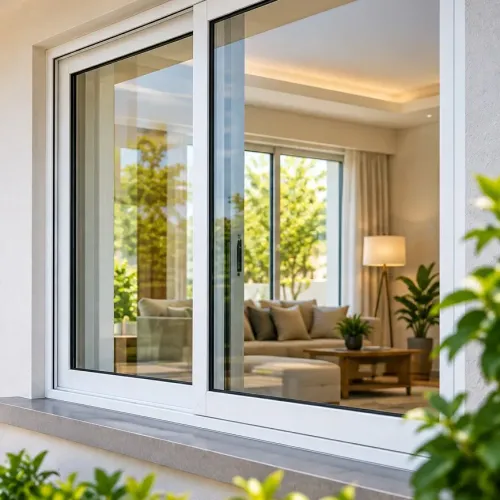
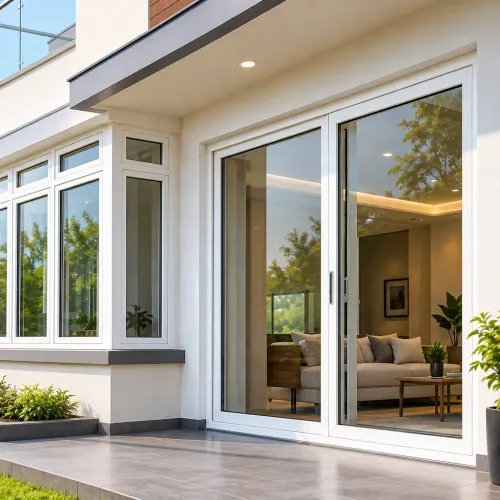
| Casement window versus sliding window | A tightly compressed casement window usually seals better than a sliding window, whose sliding seals leave more leakage paths. | Replace a noisy slider with a compression-sealed design; an open vent slot defeats the improvement. |
| Double glazing | Two panes and an air gap improve insulation, especially when pane thicknesses differ. | Check the gap, glass combination and complete-unit rating; two similar panes can transmit shared resonances. |
| Secondary glazing | A large, genuinely airtight gap between the existing window and a new inner pane can outperform a conventional replacement. | Useful for severe traffic or nightlife noise; a loose second pane is not equivalent. |
| Solid barrier | A sealed masonry wall or properly designed acoustic screen blocks more sound than glass. | Use where daylight is unnecessary; gaps, low barriers and reflections reduce its effect. |
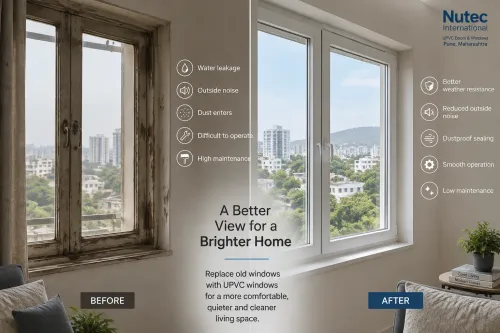
A uPVC multi-chamber frame is not an acoustic rating. Profile depth, gaskets, sash overlap, reinforcement, hardware compression and the wall-to-frame joint determine leakage. Request the installed window’s rating for glass, frame, seals and hardware, including the test standard, specimen size and rating type—not a single glass-only “dB reduction.”
Treat Seals, Gaps and Wall Junctions as Part of the Window
The specified acoustic performance survives only when the complete installed window is airtight: glass, sash, frame, seals, hardware and the wall-to-frame junction must work together. A high-performing pane will not stop traffic noise if a small gap around the frame offers an easier path.
Check these installation details before approving the work:
- Confirm the test result covers the complete window assembly, not glass alone.
- Inspect continuous frame seals, including corners, meeting rails and the sash overlap.
- Require the installer to seal the perimeter gap and the plaster or masonry reveal with a suitable acoustic sealant.
- Check that the frame is square, firmly anchored and not distorted, so hardware compresses the gaskets evenly.
- Record the glass thickness and the air gap between panes; a thicker pane alone does not guarantee a matching acoustic gain.
- Keep trickle vents, drainage openings and ventilation slots out of the sound path, or specify acoustic vents and duct silencers.
A tightly compressed casement or tilt-and-turn window usually seals more effectively than a sliding sash, but the advantage disappears if the wall junction remains open or the sash is left ajar. Ask for the installation method, sealant specification and final inspection procedure in writing.
Do not treat a multi-chamber uPVC profile as an acoustic rating. Profile depth, gasket arrangement, reinforcement, hardware compression and the glass combination determine the result after fitting.
Set a Realistic Result and Choose the Right Specification
A soundproof window reduces noise; it does not create silence. Low-frequency traffic noise from buses, trucks and generators can remain audible, while construction vibration can travel through the wall, floor or frame. Aircraft noise may also enter through the roof, doors and other flanking paths, even after the window performs well.
| Noise source | What may remain after fitting | Why |
|---|---|---|
| Low-frequency traffic noise | Engine rumble, horns and bass vibration | Long wavelengths are harder for glass and frames to block |
| Construction vibration | Drilling, piling and structural shaking | Vibration travels through masonry and building elements, not only air |
| Aircraft noise | Distant rumble and peak flyover noise | Roofs, walls and other openings provide additional paths |
| Voices and traffic hiss | Less audible sound, but not total silence | These mid- and high-frequency sounds are easier to reduce |
Before ordering, ask Nutec International or another Pune supplier to document:
- The complete installed window’s OITC and STC ratings, not only a glass dB claim. OITC gives greater weight to exterior traffic and aircraft noise; STC is less representative of low-frequency outdoor sound.
- The test standard, specimen size, rating type and laboratory report number.
- The exact tested assembly: UPVC frame, sliding or casement design, glass thickness, acoustic interlayer, air gap, seals and hardware.
- The acoustic window installation method, including perimeter sealant, frame anchoring and the wall-junction treatment.
- Whether ordinary safety laminate or a tested acoustic laminate is being supplied. The interlayer type matters.
Related product
 | UPVC Doors and Windows - *Space-saving*: Perfect for small rooms or tight spaces - *Low maintenance*: No painting or polishing needed - *Energy-efficient*: Keeps your home... View product → |
Frequently asked questions
How do I find the main path for outside noise?
Listen during the noisiest hours at the glass, frame edges, wall junctions, doors, vents, and other openings. A window is the main path only when it is weaker than the surrounding construction.
What does a soundproof window rating measure?
The Rw rating reports laboratory airborne sound reduction across tested frequencies. C and Ctr corrections show performance against higher-frequency noise and low-frequency traffic noise, so compare the complete rating rather than Rw alone.
Which window design works best for different noises?
Laminated acoustic glass helps with traffic and voices, while sealed multi-chamber frames and tight gaskets reduce leakage around the sash. Low-frequency traffic noise demands attention to Ctr and the complete window assembly.
Why can a new soundproof window produce little improvement?
Sound can bypass the window through unsealed joints, walls, doors, roofs, vents, or roller-shutter boxes. Seal the perimeter and address the weakest remaining path before choosing a higher-rated window.
What result should I expect from a soundproof window upgrade?
Expect a quieter room rather than silence. Set the specification from the noise source, worst hours, existing construction, glass rating, frame seals, and the wall junctions around the opening.