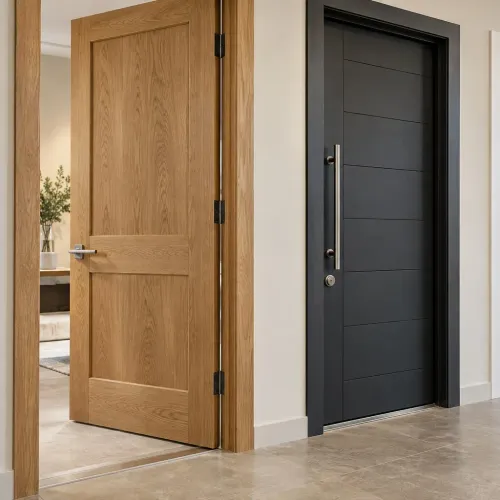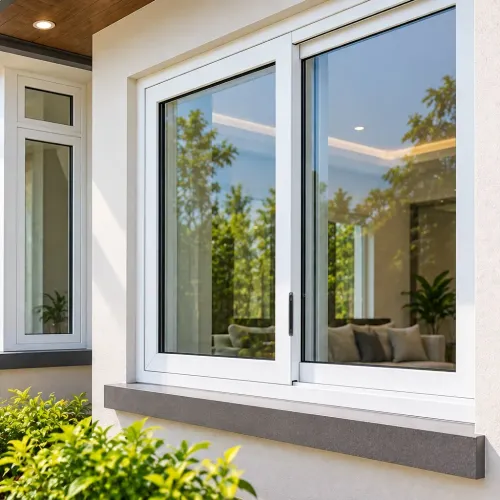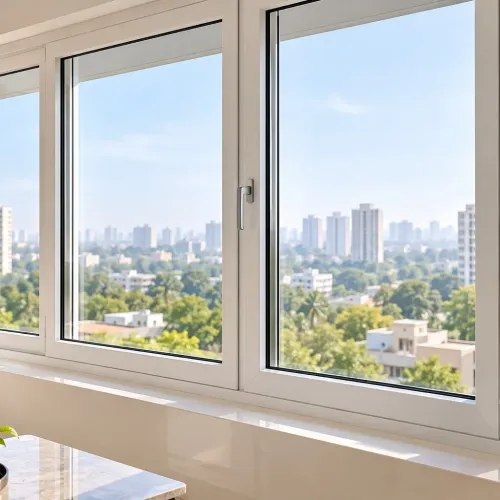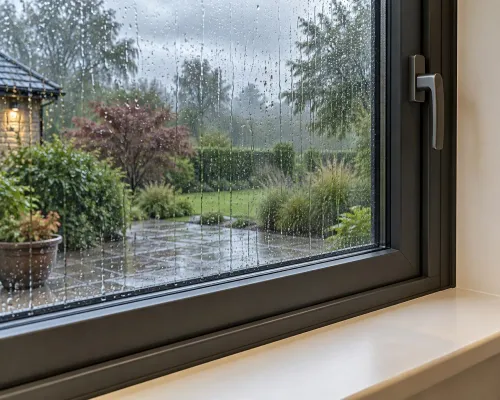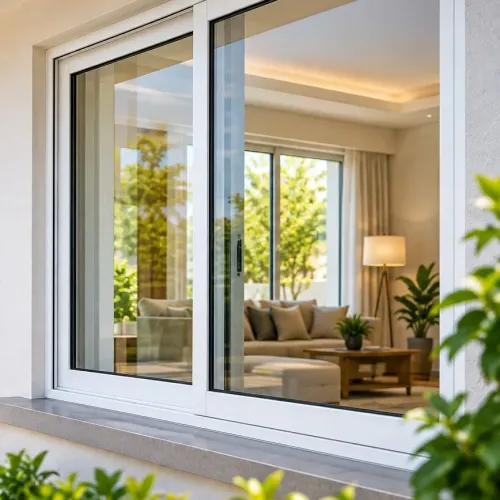

UPVC suits most ordinary residential windows and doors in Pune, but the frame material alone does not determine whether an opening will stay secure, dry, quiet and easy to operate. By checking the property use, opening conditions, component specifications and installation work, you can distinguish a suitable UPVC system from one that will fail early.
Key takeaways
- Choose reinforced profiles and suitable hardware for heavy, frequently used openings.
- Expect a long service life when installation, drainage and hardware receive regular care.
- Compare thermal comfort, maintenance, strength and appearance before choosing UPVC over aluminium or timber.
- Test locks, seals, drainage, alignment and smooth operation before accepting the installation.
Where UPVC works well—and where it does not
UPVC suitability is strong for ordinary residential use and routine commercial use in the Pune climate, where resistance to rust and rot matters. It fits bedrooms, living rooms, kitchens, bathrooms and office windows, including openings used every day, provided the hardware and reinforcement match the load.
Use UPVC confidently for:
- Apartments, villas and low-rise homes needing low repainting and resistance to dust, rain and humidity
- Offices, clinics and shops with regular window operation and moderate door traffic
- Rooms facing traffic, when the complete window includes suitable glass, continuous seals and a properly sealed installation
- Sunny elevations, when low-emissivity glass, external shading and suitable solar-heat-gain control are specified
UPVC is a poor fit for fire-rated commercial openings unless the complete frame, glass, seals, hardware and wall junction have a tested fire classification. Avoid ordinary profiles for high-impact entrances, unusually slim frames, very large dark-coloured panels or security-sensitive doors without engineered reinforcement and suitable hardware.
A well-sealed simple window can reduce noise better than a poorly installed high-specification unit. UPVC is not maintenance-free: clean drainage paths, inspect seals and lubricate moving hardware. Large sashes and frequent door use accelerate wear, so confirm replacement hardware and gaskets are locally available before ordering.
How long should a UPVC installation last?
A properly designed UPVC frame can remain usable for decades, but the practical UPVC service life of the installation is decided by its weakest part. Profile strength, correct reinforcement, glass weight, wind pressure and sash size determine whether the frame stays square under load.
Service life shortens when:
- Installation leaves the frame out of plumb, blocks drainage holes or forces the frame tightly into the opening.
- The profile or reinforcement is undersized for a large sash, sliding panel or high-wind location.
- Dark-coloured or oversized frames absorb more heat, expand, bow and begin binding against seals.
- Hardware is too light for the glass weight or frequency of use; hardware failure then appears at handles, rollers, hinges or locks.
- Gaskets, drainage paths and moving parts are ignored during cleaning and inspection.
Hardware failure and failed seals often end convenient use before the UPVC frame itself deteriorates. Handles, rollers, locks and gaskets are replaceable when the supplier provides standard specifications and local replacement parts; proprietary components can make a sound frame uneconomical to repair.
A frequently used commercial entrance therefore needs stronger hardware and more frequent inspection than a bedroom window. Large sliding doors need the manufacturer’s fixing pattern, expansion gaps and maximum frame lengths, because thermal movement can cause binding or water leakage.
Clean drainage holes, lubricate moving hardware and inspect seals periodically to extend the installation’s usable life.
UPVC versus aluminium, timber, steel and older materials
For ordinary homes, offices and shops, UPVC offers the best overall balance of comfort, maintenance and cost, provided the opening is not unusually large, impact-prone or fire-rated. Aluminium wins on slimness and rigidity; timber wins on appearance and repairability; steel wins on impact strength.
| Material | Strength and appearance | Comfort, upkeep and cost |
|---|---|---|
| UPVC | Adequate for standard windows and doors; clean, consistent finishes | Good insulation and noise control with suitable glazing; no rust or rot; low upkeep; moderate cost |
| Aluminium | Slim sightlines, strong and modern | Higher heat transfer unless thermally broken; durable and low-maintenance; often higher cost |
| Timber | Warm, natural appearance; repairable after local damage | Good insulation; needs sealing, painting and moisture checks; upkeep costs more |
| Steel | Highest impact resistance; suitable for security openings | Conducts heat, can corrode at damaged coatings; heavy; repairs and repainting are demanding |
| Older single-glazed steel or timber | Familiar appearance and possible reuse | Draughts, condensation and poor comfort; frequent repairs can outweigh replacement cost |
In a UPVC versus aluminium decision, choose aluminium for large panes, narrow frames or heavy commercial use, and UPVC for everyday comfort with less upkeep. UPVC versus timber favours UPVC where repainting is a burden, while timber suits heritage interiors. UPVC versus steel favours UPVC for normal use, not high-impact entrances.
A thermal performance comparison must include the complete installed window: profile, reinforcement, glass, spacer, seals and installation gaps. Retrofit sealed units and careful repairs can improve older materials, but a poorly sealed new window can still perform worse.
How to specify the right system for an existing opening
Measure the existing opening at several points before choosing a frame. Record width, height, diagonals, wall thickness, and whether the reveal is square, plumb and structurally sound. Check the sill slope and identify the drainage path; trapped water behind a perimeter seal will damage the wall and frame.
1. Specify a frame suited to the opening dimensions, sash size, colour and exposure. Require the profile depth, internal reinforcement material and reinforcement thickness in writing. Large sashes, dark colours and heavy glass need stronger reinforcement and hardware than a small white window.
2. Write the double glazing specification precisely: pane thicknesses, air-gap width, low-e coating, gas fill, spacer type and whole-unit warranty. Ask for the complete-window U-value, not only the glass-centre figure. Confirm that the insulating-glass unit fits the frame without excessive weight.
3. Specify continuous gaskets by material and replaceable profile, then document the perimeter sealant and backer-rod detail. At the sill, require a formed flashing or sill pan that sends water outward; silicone alone is not a drainage system.
4. Name each hardware item: hinges or friction stays, rollers, handles, locks and locking points. Ask for replacement part numbers and local availability. Nutec International can help document these choices when sizing a sliding window for an existing opening.
5. Match the design to use: opening direction, ventilation, cleaning access, security and impact exposure. For a fire-rated commercial opening, specify a complete tested assembly with its fire classification; ordinary UPVC components do not provide that rating.
Related product
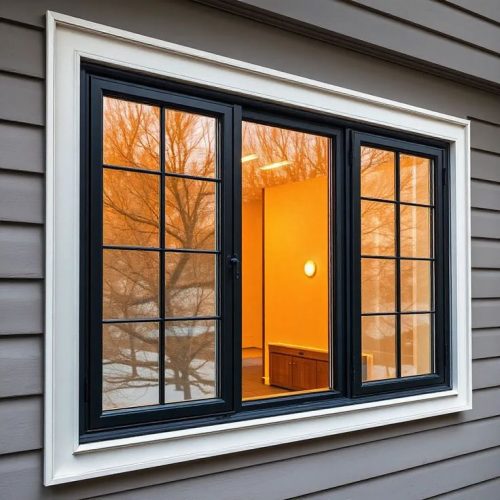 | UPVC Doors and Windows - *Space-saving*: Perfect for small rooms or tight spaces - *Low maintenance*: No painting or polishing needed - *Energy-efficient*: Keeps your home... View product → |
What to test during everyday use and before handover
Compare each operating style for clearance, ventilation, cleaning access and frequency of use before choosing it. Casement windows provide a wide opening but need clear space for the sash. Sliding windows save room but offer less open area and depend heavily on clean, correctly adjusted rollers.
Tilt-and-turn windows combine secure ventilation with inward opening, but require unobstructed space and careful hardware operation.
| Style | Practical advantage | Check during use |
|---|---|---|
| Casement windows | Wide ventilation and simple access | Sash opens without rubbing; handle reaches the locked position smoothly |
| Sliding windows | No inward or outward swing | Panels glide without lifting, binding or rattling; interlocks meet fully |
| Tilt-and-turn windows | Ventilation and full opening in one unit | Handle selects one function at a time; sash stays square and supported |
Before signing handover, use an installation inspection checklist:
- Open and close every sash or panel five times. Confirm consistent gaps, smooth handles, firm locking and no frame movement.
- Inspect gaskets, corner welds, glass edges and perimeter sealant. Replace damaged seals or visible installation gaps.
- Check that drainage holes are open and water exits outside, not onto the wall or sill.
- Test insect screens, restrictors, rollers, hinges and door thresholds where fitted.
- Request the complete-window U-value, air-permeability, watertightness and wind-resistance results for commercial work; a glass-centre U-value is not the installed window’s result.
Record defects before payment, because later adjustment is harder once finishes conceal the frame.
Frequently asked questions
Where does UPVC work well, and where is it unsuitable?
UPVC suits bedrooms, living rooms, kitchens, bathrooms and routine office windows in Pune. Match reinforcement and hardware to large, heavy or frequently used openings; choose another material when the design demands exceptional structural strength, slim sightlines or high fire resistance.
How long should a UPVC installation last?
A UPVC installation can provide many years of service when the frame is correctly reinforced, sealed and drained, and when you maintain hinges, locks, rollers and gaskets. The frame and its hardware do not necessarily have the same service life.
How does UPVC compare with aluminium, timber, steel and older materials?
UPVC resists rust and rot with less painting than steel or timber. Aluminium offers slim profiles and high rigidity, while timber provides a natural finish but needs more maintenance. Compare thermal performance, strength, upkeep, appearance and repair requirements rather than choosing by material name alone.
How should you specify UPVC for an existing opening?
Measure the opening at several points, check whether the walls are square, identify the sill and drainage path, and specify glazing, profile reinforcement, hardware, seals and opening direction. Confirm that the frame can carry the glass and withstand the opening’s daily use.
What should you test before accepting a UPVC installation?
Open and close every sash, test each lock and handle, inspect gasket contact, check frame alignment, pour water toward the sill to confirm drainage, and look for air, dust or water gaps around the perimeter.