A door can look attractive in a showroom and still leak during the monsoon, bind in its frame, admit street noise or become difficult to secure. By checking the opening, configuration, construction, glazing, hardware, installation and warranty in the right order, you can reject unsuitable options before they become an expensive replacement.
Key takeaways
- Measure the opening before choosing a door configuration.
- Compare complete-unit performance, not material labels alone.
- Match glazing, thresholds and drainage to the location.
- Confirm installation responsibility, warranty coverage and fire-rating documents.
Choosing the Door Type Before Checking the Opening
Choose the door configuration after matching the room, opening and daily use, not before. A bathroom or interior opening may suit a single hinged door; a balcony needs weather control and drainage; an entrance needs frequent-cycle hardware, security and clear access. Door selection mistakes begin when appearance decides the layout.
Measure the structural opening, not just the existing shutter. Record finished width and height at several points, both diagonals for squareness, wall thickness, sill level, proposed threshold height and the clearance needed for the frame, handle and shutter swing.
- Use hinged doors where you have clear floor space for the arc and want a simple, serviceable seal.
- Use sliding doors when furniture or a narrow passage blocks a swing, but reserve wall space for the parked panel.
- Use folding doors for a wide opening that needs a large clear passage, accepting more hardware and operating points.
- Use French doors only when two opening leaves and the meeting stile suit the room.
- Specify lift-and-slide hardware for large, heavy panels; do not assume an ordinary slider can carry them.
| Option | Space and clearance | Suitable use |
|---|---|---|
| Hinged doors | Swing area required | Entrances, bathrooms, rooms |
| Sliding doors | Wall or fixed-panel space | Balconies, compact rooms |
| Folding doors | Stacking space at one side | Wide openings, occasional full access |
Check that the sill has sloped drainage, clear weep holes and an external drip. A flush threshold is not automatically better: it can reduce the water barrier, so coordinate threshold height, floor level and drainage. Ask for correctly rated rollers, adjustable hinges and replaceable seals; cheap hardware can make a sound door unusable.
Comparing Materials and Complete-Unit Performance
A thicker profile or higher chamber count does not prove that a door will perform better. Compare the complete fabricated-and-installed doorset: leaf, frame, glass, seals, hinges, lock, threshold, drainage and wall joint. Ask for test results for the actual configuration, not a brochure claim about the material.
| Material | Strengths | Check before choosing |
|---|---|---|
| UPVC doors | Low maintenance, corrosion resistance and good insulation | Frame reinforcement, welded corners, gasket quality, threshold drainage and resistance to air, water and wind |
| Aluminium doors | Slim sightlines, rigidity and large opening sizes | Thermal break, frame U-factor, condensation risk, coating quality and the tested shutter-frame combination |
| Timber doors | Repairable, tactile and naturally insulating when properly built | Moisture content, preservative treatment, warping allowance, seal condition and maintenance schedule |
| Steel doors | High impact resistance and robust security | Corrosion protection, weight, hinge capacity, thermal bridging and whether the doorset has a fire test |
Compare U-factor and solar-control performance for glazed doors; grey or bronze tint reduces glare but is not equivalent to low-emissivity coating. Also check air leakage, water penetration, wind resistance, closing force and acoustic results for the complete unit.
Treat drainage as a specification in Pune’s monsoon. Require visible weep holes, a sloped sill, an external drip and a sealed frame-to-wall joint. A flush threshold can reduce the water barrier, so match it with the sill, outlet, floor level and weather test.
Never call a strong, multi-lock door fire-rated: fire resistance belongs to a tested assembly with the leaf, frame, glass, hinges, closer, lock and seals.
Selecting Glazing, Thresholds and Drainage for the Location
Match door glazing to the exposure and hazard, not to thickness alone. Use privacy glass where sightlines matter, and specify safety glazing for the door leaf, side panels, low-level panes or any large pane someone could walk into. Choose whether breakage must leave a barrier.
| Option | Best fit | Check before ordering |
|---|---|---|
| Toughened glass | Impact safety where residual containment is not essential | It breaks into small fragments but does not remain a barrier |
| Laminated glass | Safety where the pane must retain fragments after breakage | Confirm the interlayer and privacy level |
| Low-E glass | Reducing heat entering sun-exposed rooms | Compare the U-factor and solar heat-gain performance; grey or bronze tint alone is not equivalent |
- For west- or south-facing Pune openings, ask for the glass U-factor and solar-control figure, not only a 6-12-6 description. Double glazing insulates only while its sealed airspace, spacer and seals remain intact; failed seals cause condensation or permanent fogging between panes.
- Reject a low or flush threshold if it leaves little water barrier or drainage space at an exterior or balcony door. If accessibility requires one, check the sill, floor level, drainage outlet and weather-performance test as one detail.
- Inspect the frame for clear weep holes, a sloped sill surface and an external drip or suitable sill detail. Keep weep holes clear, and require properly sealed frame-to-wall joints; blocked outlets, an unlevel sill and poor joints commonly cause monsoon leakage.
Overlooking Security, Safety and Fire-Resistance Details
A door becomes a weak point when its lock, hinges or glass are weaker than the frame. For door security, specify a multipoint locking system with hooks or bolts engaging the frame, a cylinder protected against snapping and drilling, and a handle that can be replaced without changing the whole door.
Ask for these hardware details before comparing finishes:
- Hinges rated for the shutter’s weight, with adjustment after installation and hinge protection that prevents access to the knuckles or fixing screws.
- Steel reinforcement that continues through the lock, hinge and handle zones, with fixings anchored into it; steel gauge alone proves little.
- Safety glazing in doors, side panels and low-level panes. Toughened glass breaks into small fragments but stops being a barrier; laminated glass retains fragments and gives better residual containment.
| Detail | Specify | Failure prevented |
|---|---|---|
| Lock | Multipoint locking, protected cylinder and replaceable handle | Forced entry and premature hardware failure |
| Hinges | Load-rated, adjustable hinges with hinge protection | Sagging, misalignment and hinge-side attack |
| Glass | Toughened or laminated safety glass, selected for the hazard | Severe injury or an open passage after breakage |
| Fire rating | A tested doorset classification such as E30, EI30 or EI60 | Smoke and fire passing through the opening |
Fire-rated doors require a tested assembly: leaf, frame, glazing, hinges, closer, lock and seals. A strong door with several locks is not a fire-rated doorset. Verify the rating applies to the complete installed configuration, not just one component.
Treating Installation and Warranty as Afterthoughts
A low quoted price can become expensive if door installation, testing and service are excluded. Before ordering, make the supplier identify who measures the opening, installs the frame, seals the frame-to-wall joint, adjusts the shutter and returns for defects.
1. Get installation responsibility in writing. Confirm whether the price includes removal of the old frame, transport, fixing, perimeter sealing, sill preparation, debris removal and final adjustment. Ask how the installer will handle expansion gaps on large or dark-coloured frames; rigidly packing the perimeter with mortar can cause bowing, binding and seal failure.
2. Ask for the tests that apply to the complete doorset, not only the UPVC profile. For an exterior door, request evidence of water-resistance or leakage testing and inspect the proposed drainage: clear weep holes, a sloped sill and an external drip detail. These details protect weather sealing during Pune’s monsoon.
A fire-resisting door needs a tested assembly covering the leaf, frame, glazing, hinges, closer, lock and seals; multiple locks do not create a fire rating.
3. Obtain a maintenance schedule before payment. It should state who cleans drainage paths, lubricates or adjusts hardware, checks gaskets and replaces worn seals, and how quickly service visits occur. Ask the UPVC door manufacturer Pune buyers are considering for these obligations in writing; Nutec International can be compared on the same documented basis.
4. Read the door warranty component by component. Check separate coverage for profile finish, insulating-glass seals, hardware, gaskets, installation, water leakage and service response, then record exclusions for alterations, blocked drainage and missed maintenance. A verbal “full warranty” is not enough.
Related product
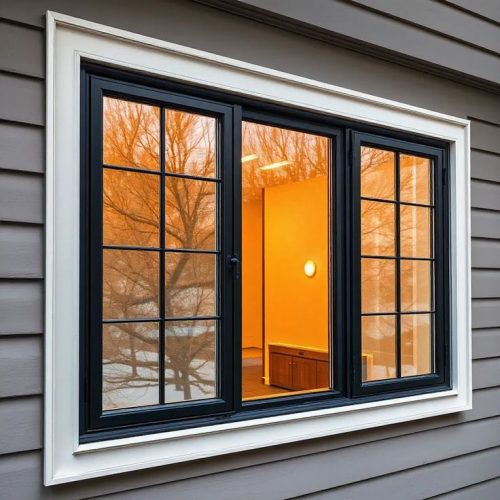 | UPVC Doors and Windows - *Space-saving*: Perfect for small rooms or tight spaces - *Low maintenance*: No painting or polishing needed - *Energy-efficient*: Keeps your home... View product → |
Frequently asked questions
Why should you check the opening before choosing a door type?
The opening, room function and daily use determine whether a hinged, sliding or other configuration will work. Measure width, height, depth, swing clearance and threshold space before ordering.
How should you compare door materials?
Compare the complete door unit, including the frame, seals, hardware, glazing, threshold and drainage. A material label alone does not show how the installed door will resist weather, noise, wear or water leakage.
What should you check when selecting glazing, thresholds and drainage?
Match the glazing to privacy, heat, daylight and safety needs. Check threshold height and accessibility, then confirm that frame drainage routes water away from the interior and suits the exposed location.
Which security, safety and fire-resistance details matter?
Check lock type, hinge protection, multipoint locking where required, safety glass in vulnerable locations, clear access and documented fire resistance when the opening forms part of a protected route.
What should you confirm about installation and warranty?
Confirm who will measure, install, seal and adjust the door, and ask what the warranty covers. Check exclusions for glass, hardware, finish, water leakage and damage caused by incorrect installation.